Tuesday, September 1, 2009

Child labour in India


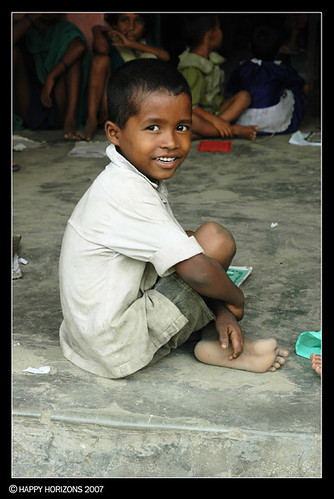
In India, poor children start working at a very young age. Some of the children work to help their families and at the same time, some families want their children to help them to run the family business. The government of India has always followed a proactive policy to fight with the problem of child labour.
The successive governments at centre have always stood for constitutional, statutory and developmental measures to eliminate the cause of child labor. The constitution of India has deliberately integrated appropriate provisions to provide compulsory universal elementary education and protection from child labor as well for children.
However, the Chief Justice of India (CJI), K G Balakrishnan, lamented that all the anti-child labor laws were not being implemented across the country. He, while delivering speech on Friday at a seminar in the country on justice delivery standards for children, said that there were several proper legislations in place just to protect children and to work for children’s welfare.He further said that the implementations of these laws are still lagging behind in the country and it needs strong will power to implement such laws at ground level first. The seminar was organized by the Legal Assistance Forum. He also told that very few states such as Manipur and Orissa were implementing the Juvenile Justice Act seriously. He also said at the seminar that child labor was always a major problem in the country.
According to the data, India has a child population of over 445 million and 126 million of them are less than five years old. Is India serious about the welfare of its future, the children?
The progress report for children, released by UNICEF in December 2007, says that an estimated 2.1 million children in India died before their fifth birthday in just one year. The shocking part of the story is that of these deaths, more than one million deaths happened in case of less than 29-day-old infants. They died but the causes were preventable and curable. The data says that 25 per cent of all neo-natal deaths across the world occurred in India.
Nearly 50 per cent of low weight babies (8.3 million infants were low weight babies with less than 2,500 grams) died before their fifth birthday. That means at least 1/3rd of less-than-five-year-old underweight children of the world are in India.
The government of India will have to work hard in cooperation with state governments to restrict the child labor in the country and to concentrate hard to give better healthcare to the newborn babies as well. Sometimes, such goals look difficult to attain due to cultural and economic factors but this is the need of the time for us to stand and take oath to take care of the children, who are the future of our nation.

Thursday, August 6, 2009

YUVA SPANDANA

hi frnz YUVA SPANDANA is an Non Governmental Organisation(regd no:502). It is meant for a social cause.Our main aims and objectives are as follows:
  1. Conducting blood donation camps.
  2. Eradicating child labour.
  3. Educating the slums.
  4. Promoting rural education by conducting talent tests.(FIRE)
  5. saving our environment.
  6. Helping physically challenged.
  7. Helping orphanages and old age homes.
  8. Educating people about national spirit.

Friday, June 26, 2009

GLOBAL WARMING

Global warming is the increase in the average temperature of the Earth's near-surface air and oceans since the mid-20th century and its projected continuation.

Wednesday, June 24, 2009

Children in India

How can there be too many children? That is like saying there are too many flowers.


Don’t be fooled by India’s economic boom – for a vast swathe of the population the situation has not improved in generations. Hundreds of millions are trapped by caste and gender discrimination, and by the cycle of: poverty--> child labour-->no education-->poverty. These people endure some of the worst conditions experienced anywhere in the world. For instance, an Indian child is more likely to be malnourished, have inadequate sanitation, not attend school, remain illiterate and marry underage, than is a child from Africa or any other global region.

Indian Statistics of  Children :

India population = 1,165 millions ,

Children <18 age =" 420">

Children <5 age  =" 118">

Living on 1$ a day = 360 millions ,

      of  whom , children = 140millions ,

Orphans =35 millions ,

H.I.V /AIDS  infected = 5.2 millions ,

Rajastan has highest of  56 millions ,

Jaipur has lowest of  3millions of children prone affected areas .


Perhaps the most disadvantaged group in India are the millions of street children who live or work on the street. Street children have fallen through society’s cracks – there are few ladders for them to climb back up. They live as their parents did and as their own children are likely to do.

Children live and work on the street because their parents are poor, or they are orphans, or they have run away from home, often to escape abuse. They are invariably malnourished, receive scant education or medical treatment, and are involved in child labour from an early age. Child prostitution and sexual abuse are also major problems, as is addiction to drugs. These children live in a different world to the emerging middle class. Taken as a separate nation, they represent one of the neediest peoples on the planet.

In Jaipur the problems of street children are chronic.

Like India, the city of Jaipur has two sides: it has prosperous jewellery and tourist industries, yet also sprawling slums and acute poverty. As the capital of the poor, desert state of Rajasthan, Jaipur has been the focal point of massive immigration during a recent series of droughts. These migrants, plus many impoverished others, live with their children in illegal makeshift shacks, tents, or on the street, and are regularly moved on by authorities.

In Jaipur, there are hundreds of thousands of destitute, runaway and orphaned children living hand-to-mouth. For them education is an unattainable luxury, or an irrelevance. They lose their childhoods and have little hope for a better future.